

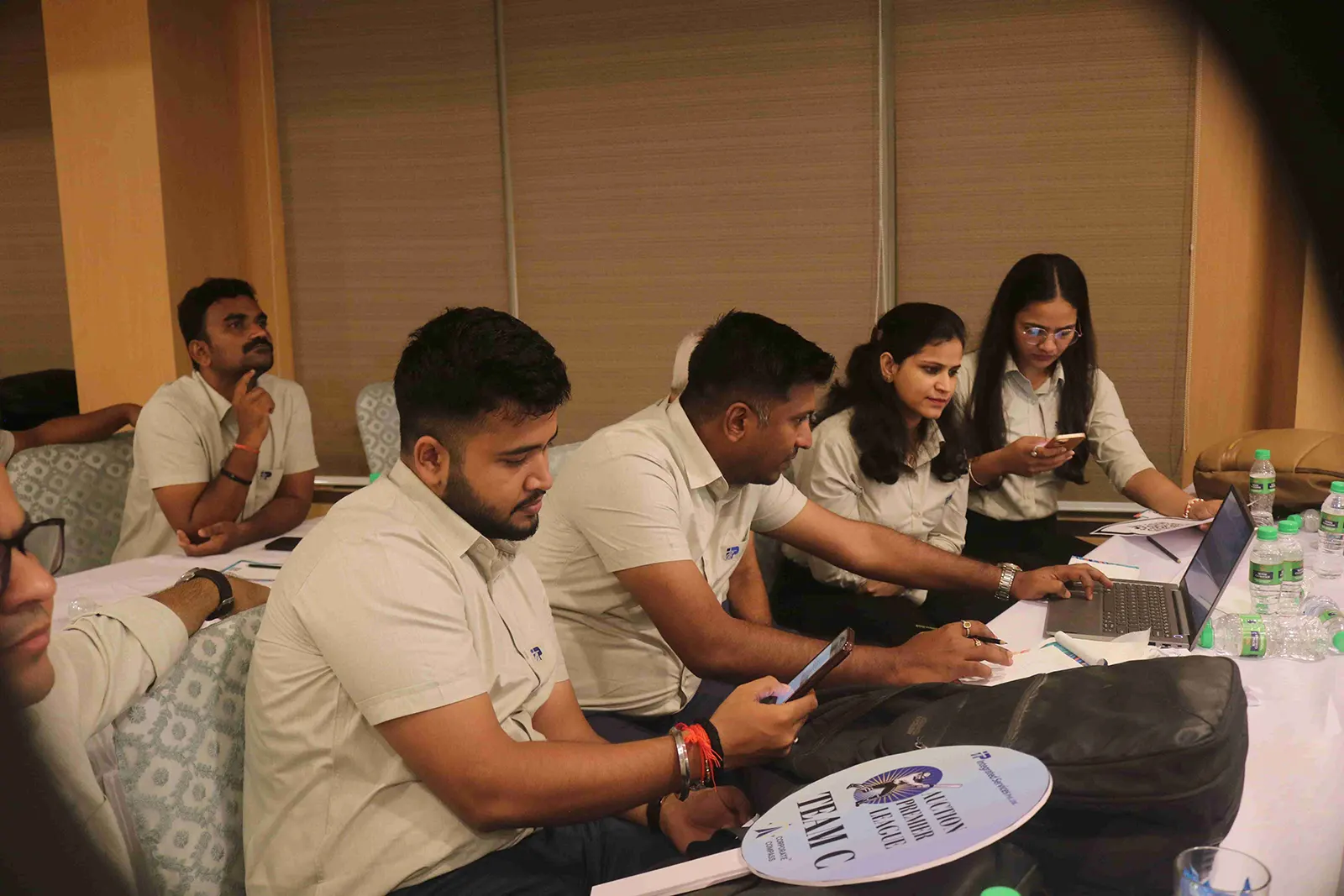
Growing companies with diverse teams require a training system that transcends the conventional classroom training. Due to the transition to remote and hybrid work, business simulation games have gained increasing popularity among companies to develop engaging, interactive, and practical learning experiences. Contrary to the simple business-based games, Business Simulation Games in Corporation Training put the employees in real-life situations in the workplace where they solve, make strategic decisions, work with their teammates, and acquire the essential business skills in a risk-free environment.
These role-played corporate training simulations are used to enhance leadership, communication, decision-making, and teamwork, and to retain the employees motivated and engaged. Simulation-based learning provides quantifiable outcomes whether you are training new employees, emerging leaders, or enhancing cross-functional teamwork. Here we shall discuss the 10 Best Business Simulation Games for Corporate Training in 2026 and how, through collaboration with corporate learning partners with experience, we can help organizations to form stronger, smarter, and more collaborative teams.
Business simulation games are often confused with standard business oriented or office simulation games. However, the two are completely different.
Business simulation games can be defined as virtual worlds, which imitate real-life business situations, allowing players to execute tasks, solve business problems, cooperate with fellow team members, and make strategic decisions in a simulated digital environment.
The simulations are designed for organizations and corporate groups, but not entertainment.
For example, participants may need to:
The corporate training simulations, in contrast to the traditional business board games, are simulations that mimic the work place settings where employees are exposed to real business situations without any real world risks.
This form of learning is practical because it enables learners to experiment, fail safely, learn through errors and also enhance performance way quicker than traditional methods of learning.
The workplace has changed dramatically over the last few years. Remote work, hybrid offices, global collaboration, and digital communication have become the new normal.
While technology has improved flexibility, it has also created challenges.
Employees often struggle with:
Experiences are better remembered by people compared to lectures. Corporate training simulations involve employees making decisions, analyzing situations, and collaboratively meeting shared goals.
This is experiential learning, a great way to retain knowledge compared to passive training.
Modern businesses rely heavily on communication across departments and geographical locations.
Virtual simulations encourage participants to:
These practical communication skills directly translate into better workplace performance.
Most projects nowadays are associated with collaboration among various departments.
The most significant benefit of business simulation games is that they help motivate employees in various teams to cooperate with each other in order to achieve a common objective.
Marketing, sales, finance, HR and operations teams can understand the impacts of their decisions on others and this forms a closer organizational alignment..
Leadership cannot be learned through PowerPoint presentations alone.
Simulation-based learning allows participants to:
Future leaders gain confidence through practical experience instead of theoretical instruction.
Enhanced collaboration among departments is one of the largest reasons why organizations are implementing Business Simulation Games. Knowing How Business Simulations Help Cross-Functional Teams can assist HR, Sales, Finance, Marketing and Operations staff to collaborate on shared goals.
Simulation-based learning can be used in conjunction with Office Game Ideas to Strengthen Team Bonding and Team Building Games Your Whole Team Will Love to build better workplace relationships and enhance the overall performance of the organization.
Building high-performing organizations needs more than traditional lectures that are characteristic of modern organizations. Corporate Training Business Simulation Games are the most effective and involve employees in business situations that are realistic and demand that they communicate, cooperate, solve problems, and make decisions under pressure. Corporate Compass provides a number of interactive virtual experiences which companies can use to build on teamwork and attain quantifiable learning outputs.
One of the flagship business simulation games that is provided by Corporate Compass is the Million Dollar Challenge. The participants collaborate in groups to make business strategies, manage resources, solve business problems, and optimize their performance under the pressure of a simulated business.
This simulation, unlike in the traditional training sessions, recreates the hectic decision-making process in modern organizations. Competing with other groups, teams have to balance risk, work as a team, and be adaptable to changing conditions.
This simulation is particularly suitable for leadership teams, management development programs, and sales conferences.
One of the most famous corporate training simulations is the Virtual Escape Room as it involves critical thinking and teamwork in an exciting online setting.
Within a short period of time, participants can solve the puzzles related to each other, reveal the hidden hints, and complete missions. Effective communication and collaboration is what determines success and not individual performance.
This activity works exceptionally well for remote and hybrid teams.
The Virtual Treasure Hunt makes online conferences more exciting as employees are invited to a game where they can solve riddles and play interactive games in groups.
Rather than sitting back and passively attend virtual sessions, participants proactively work towards a common goal enhancing both engagement and learning.
This is one of the most effective Business Simulation Games for onboarding new employees and strengthening remote teams.
The Murder Mystery Challenge puts employees into a role-played investigative situation that requires them to investigate evidence, interview suspects, and find the right answer before time runs out.
The activity promotes group decision-making as well as teamwork and logical thinking.
Because every participant contributes unique information, the activity naturally promotes stronger communication across teams.
The Online Team Challenge is an integration of several collaborative mini-games into a single learning experience.
The participants go through problem-solving activities, communication activities, and creative problems, which involve the team members always being coordinated.
Organizations frequently use this activity during virtual offsites and employee engagement programs.
A Virtual Quiz Championship is far more than a simple knowledge competition.
Corporate Compass customizes quizzes around organizational values, products, company culture, leadership principles, or industry knowledge, making learning both enjoyable and memorable.
This simulation is ideal for induction programs and learning reinforcement sessions.
This simulation requires participants to collaborate to solve a variety of realistic business challenges including customers, operations, budgets, and growth strategies.
Situations are analyzed, actions are prioritized, resources are assigned, and recommendations are offered in teams and facilitator feedback is given afterwards.
This is one of the most realistic Business Simulation Games for Corporate Training to enable the employees to use theoretical knowledge in the actual business setup.
Innovation leads to the success of a business, and this simulation helps to make participants think outside the box.
Working within realistic constraints under the supervision of real conditions, teams brainstorm ideas, evaluate alternatives, and create innovative business concepts.
The employees get to know the value of structured creativity in building an organization.
Departmental silos are one of the largest challenges faced in the workplace. This simulation is an integration of employees in various functions to address common business goals.
Marketing, finance, HR, sales, and operations need to be in contact with each other to bring success to the organization, and it shows how Business Simulations help Cross-Functional Teams build a stronger working relationship.
The Leadership Decision Simulation is a simulation of real life situations at work where managers are required to make complex decisions and have incomplete information.
Participants are taught to juggle conflicting priorities, effectively communicate, and guide teams during times of uncertainty.
This simulation is in contrast to classroom learning; the leaders can explore the effects of their decisions in a fully safe setting.
As organizations continue embracing digital learning, these corporate training simulations provide engaging alternatives to conventional workshops. Combined with experienced corporate learning partners, these simulations help organizations improve collaboration, engagement, leadership, and overall business performance through experiential learning.
As organizations continue embracing digital learning, these corporate training simulations provide engaging alternatives to conventional workshops. Together with the experienced corporate partners in learning, these simulations assist organizations in enhancing collaboration, engagement, leadership, and the overall performance of the business through experiential learning.
Corporate Training Investing in Business Simulation Games helps companies prepare future ready teams that are able to make decisions, communicate and lead. The combination of these simulations and Office Game Ideas to Strengthen Team Bonding, Team Building Games Your Whole Team Will Love, and Fun Games for Corporate Events provides a balanced approach to employee engagement. Through the collaboration with established corporate learning partners, companies can engage in tailored learning opportunities and get a clearer insight into the role of Business Simulations in Cross-Functional Teams, which will eventually lead to enhanced teamwork and eventual organizational success.
Business simulation games are interactive trainings that simulate real situations in the workplace to enable employees to make decisions, collaborate, lead, and solve problems in a safe setting that is risk-free.
Corporate training simulations enhance employee engagement, communication, collaboration and critical thinking, as they enable participants to gain hands-on learning experiences, which assist them to apply the knowledge in real business scenarios.
Yes. Corporate Training Business Simulation Games are created to operate in both virtual and hybrid workplaces, allowing employees to work remotely, interact, and learn necessary skills needed in the workplace.
Skilled corporate learning partners will develop tailored simulation programs that are oriented towards business goals to provide more interesting learning opportunities that enhance performance, teamwork, leadership advancement and overall employee productivity.