

Businesses currently are characterized by a high rate of change, organizations are daily experiencing pressure to create agile, competent and future-oriented workforces. Nonetheless, it is often difficult in most firms to sustain a focused Learning and Development (L&D) unit to continuously design, execute, and assess effective employee development programs. Organizations are often not able to meet their learning objectives due to budget constraints, lack of internal expertise, and evolving business priorities.
Corporate Compass comes in here as an expanded L&D team. Corporate Compass does not serve as an ordinary training provider, but collaborates with companies to comprehend their business aims, determine areas of skills development, create their specific learning paths, and provide quantifiable results by means of immersive learning experiences.
By combining strategic consulting with Experiential Learning, Corporate Compass helps organizations create a culture of continuous learning while empowering employees to perform at their highest potential.
The role of Learning and Development has been changing tremendously in the last 10 years. The modern L&D practitioners are supposed to facilitate organizational change, employee involvement, leadership growth, digitalization, and performance enhancement at the same time.
Many organizations face common challenges such as:
Businesses are extending their L&D capacity by outsourcing to specialist learning partners such as Corporate Compass rather than employing an extensive internal team. Corporate Compass is an extension of your HR and L&D department, which is designed to design a learning solution that meets your organizational objectives.
The conventional approaches to training use a lot of presentations, lectures and theories. These techniques can convey information, although they do not often alter behavior in the workplace. At this point, the question of what Experiential Learning is becomes a significant one for organizations that want improved learning outcomes.
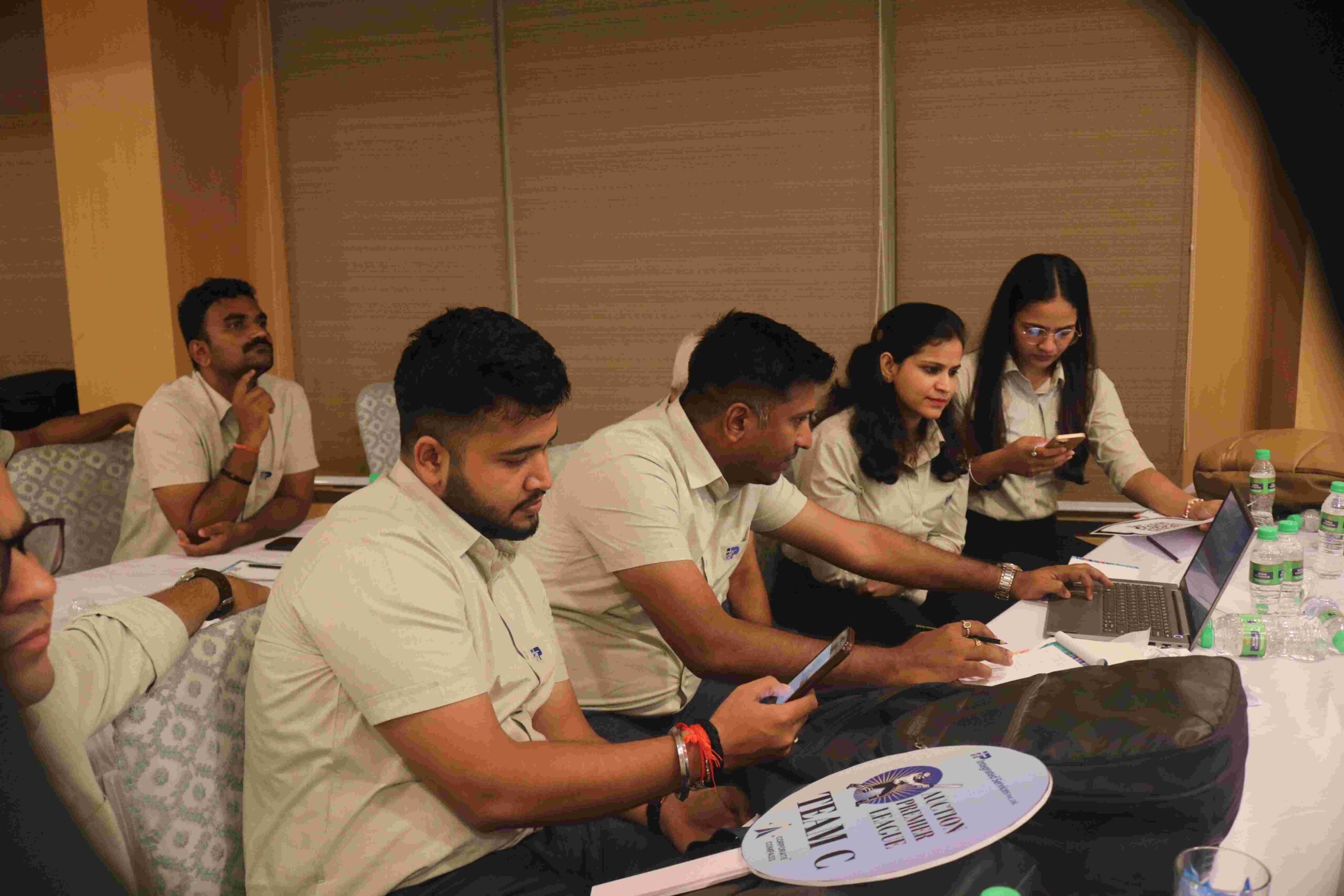
Experiential Learning is a learner-focused method that enables employees to acquire knowledge through active involvement in realistic activities, simulations, business games, role plays, collaborative activities, and reflections. Participants are not just listening they are going through the same situations as those encountered at the workplace.
Corporate Compass applies experiential approaches to all learning interventions to make sure that the participants learn not only the concepts but also can use them in their daily practice.
Every organization has unique objectives, challenges, and workforce dynamics. A one-size-fits-all training solution rarely delivers sustainable results.
Corporate Compass begins every engagement by understanding:
This consultative approach ensures every learning initiative contributes directly to business growth rather than simply completing a training calendar.
Corporate Compass aids organizations in Identifying Employee Training and Development Needs Effectively before any intervention can be recommended, and this is achieved by conducting comprehensive assessments that incorporate:
When the real capability gaps are determined rather than the imagined ones, organizations will spend their learning budgets more prudently and will get much better returns on training investments. A designed training needs analysis also helps the organization to focus on high-impact learning programs rather than undertake unnecessary training programs.
Employees today expect relevant, engaging, and practical learning experiences. Corporate Compass designs customized learning journeys based on:
Instead of isolated workshops, learners experience structured development journeys consisting of assessments, classroom facilitation, experiential activities, coaching, reflection sessions, and action planning.
This holistic approach creates lasting behavioral change.
Employees tend to be concerned with their immediate tasks only, without knowing the contribution that their work makes to the success of the organization. Corporate Compass assists organizations in Help Your Employees To See The Big Picture using interactive workshops that promote strategic thinking, cross-functional cooperation, and systems thinking.
Participants are taught through business simulations and experiential activities how their individual choices affect clients, coworkers, business efficiency, and performance. When the employees are aware of the bigger organizational vision, they are more responsible, cooperative, and active.
This better attitude also increases the level of employee engagement since people are aware of the importance of their input.
Adults learn best through experience. Research consistently shows that people remember significantly more when they actively participate rather than passively listen.
Corporate Compass leverages Experiential Learning techniques such as:
These methods encourage learners to think critically, solve problems, communicate effectively, and make informed decisions in realistic workplace situations.
Instead of memorizing concepts, participants develop practical skills they can immediately apply.
Organizations increasingly recognize that Experiential Learning Delivers Better Outcomes in the Workplace because it bridges the gap between theory and practice.
Employees who participate in experiential learning programs demonstrate:
Since participants experience real-life scenarios, they develop emotional connections with the learning process, resulting in stronger retention and long-term behavioral transformation.
Corporate Compass focuses not just on delivering workshops but on creating measurable improvements in workplace performance.
Organizations that are future-ready need leaders who are confident and able to inspire their teams, manage change, and drive innovation. Corporate Compass helps in leadership development by creating immersive learning experiences that aid in managers’ development:
Experiential leadership programs help participants to consider their leadership styles and learn new behaviors in non-threatening learning settings. This practical method is a much faster way of developing leaders as opposed to a lecture-based training.
The Knowledge of Experiential Learning vs Traditional Training assists organizations in making the appropriate development strategy. Conventional training usually focuses on content presentation, instructor lectures, and passive involvement. Although it contains theoretical information, it does not necessarily affect workplace behavior.
Experiential Learning, in contrast, is about active engagement, reflection, feedback, and practice. Employees are problem solvers, decision-makers, colleagues, and learners who learn from failures and achievements.
The key differences include:
Corporate Compass combines modern facilitation techniques with practical experiences to ensure learning translates into measurable performance improvements.
New processes and technologies are not the only things that are needed to transform the business. Effective change requires individuals to embrace new practices. Corporate Compass collaborates with companies in times of transition by assisting employees:
Experiential interventions enable employees to be agents of change, instead of victims of change.
Good learning programs must have quantifiable results. Corporate Compass measures the effectiveness of programs with measures of:
This fact-based model helps organizations to keep on enhancing their learning plans in addition to showing the payoff of having employees developed.
Organizations across industries trust Corporate Compass because it goes beyond conventional training delivery.
As an extended L&D partner, Corporate Compass offers:
Rather than delivering isolated workshops, Corporate Compass becomes a long-term partner committed to building capable, confident, and future-ready teams.
Employee development has become a strategic requirement and not an initiative as organizations continue to grapple with the blistering technological, economic, and workforce changes.
Corporate Compass is a long-term Learning and Development team that serves as a strategically aligned Learning and Development team by aligning learning strategies with business goals, determining gaps in capabilities, creating tailored interventions, and providing transformational learning experiences through Experiential Learning.
Corporate Compass offers real-world, business-oriented solutions, which deliver quantifiable outcomes, regardless of whether your organization is interested in knowing What is Experiential Learning, identifying Employee Training and Development Needs Effectively, or discovering why Experiential Learning delivers better outcomes in the Workplace.
Through a mix of strategic consulting, immersive learning approaches, and ongoing improvement, Corporate Compass helps organizations to produce competent employees, better leaders, and better-performing teams that can lead to sustainable business success.