

Leadership is one of the most valuable skills an employee can develop, but it cannot be mastered through theory alone. Remarkable leaders learn by making decisions, solving problems, communicating as a team, and demonstrating flexibility in new situations. That is why many organizations are replacing traditional training processes with Business Simulation Games that provide hands-on learning.
In contrast to classroom activities, leadership simulation games put participants in realistic business situations in which they undergo the realities of people, resources, and business performance management. They make employees think and act strategically, work together, and make decisions when under pressure without the dangers of any consequences in the real world.
Business Simulation Games offer a top-notch level of involvement in the process of developing future managers or enhancing the leadership skills of current leaders. Organizations can use the help of the experienced corporate learning partners to develop an immersive learning experience that enhances teamwork, communication, and business performance.
Business Simulation Games come in here with a big change. They simulate work-related situations in which team members have to collaborate, interpret information, solve problems, and make decisions impacting business performance. Participants are taught by action and instant feedback rather than memorizing the theories.
These simulations usually necessitate teams to allocate scarce resources, meet deadlines, negotiate with stakeholders, and react to unforeseen problems. The leadership traits such as confidence, accountability, adaptability, and strategic thinking are enhanced by such experiences.
Another significant advantage is that participants are aware of the interdependence among various business functions. Simulations can facilitate cross-functional teams in the workplace as noted in How Business Simulations Help Cross-Functional Teams, as they help ensure that cross-functional teams communicate effectively and that silos do not exist in the workplace.
All leaders need to see beyond what is going on in the day-to-day activities and look at the long-term objectives. Simulations educate the participants that they should consider various choices prior to decision-making and learn how the choices affect the business as a whole.
A number of the leadership simulation games replicate scenarios whereby the players possess little information and have strict deadlines. This enhances the effectiveness and trust in timely decision-making.
Clear communication is essential for leadership. The simulation activities would involve participants providing ideas, information, negotiating solutions, and inspiring team members.
Teamwork is very important in modern businesses. Business Simulation Games bring together employees across functions, encouraging them to collaborate and learn to value different employees’ perspectives in common challenges.
There are seldom black-and-white answers to business situations. Simulations build up critical thinking as they prompt the participants to diagnose issues, assess options, and apply realistic solutions.
There are unforeseen events in business. Experiential games equip leaders to be adaptable and alter strategies in case of a shift in circumstances.
Ownership is one of the largest lessons that the participants learn. Each decision comes with its own ramifications and thus, future-generation leaders must be accountable to the outcome.
Million Dollar Challenge is a team building game based on strategies in which players must undertake business tasks to expand their virtual wealth. Leaders are required to make fast decisions, manage the resources efficiently, and inspire their teams to get the best returns. The game enhances the ability to think strategically, work as a team, and make decisions under pressure.
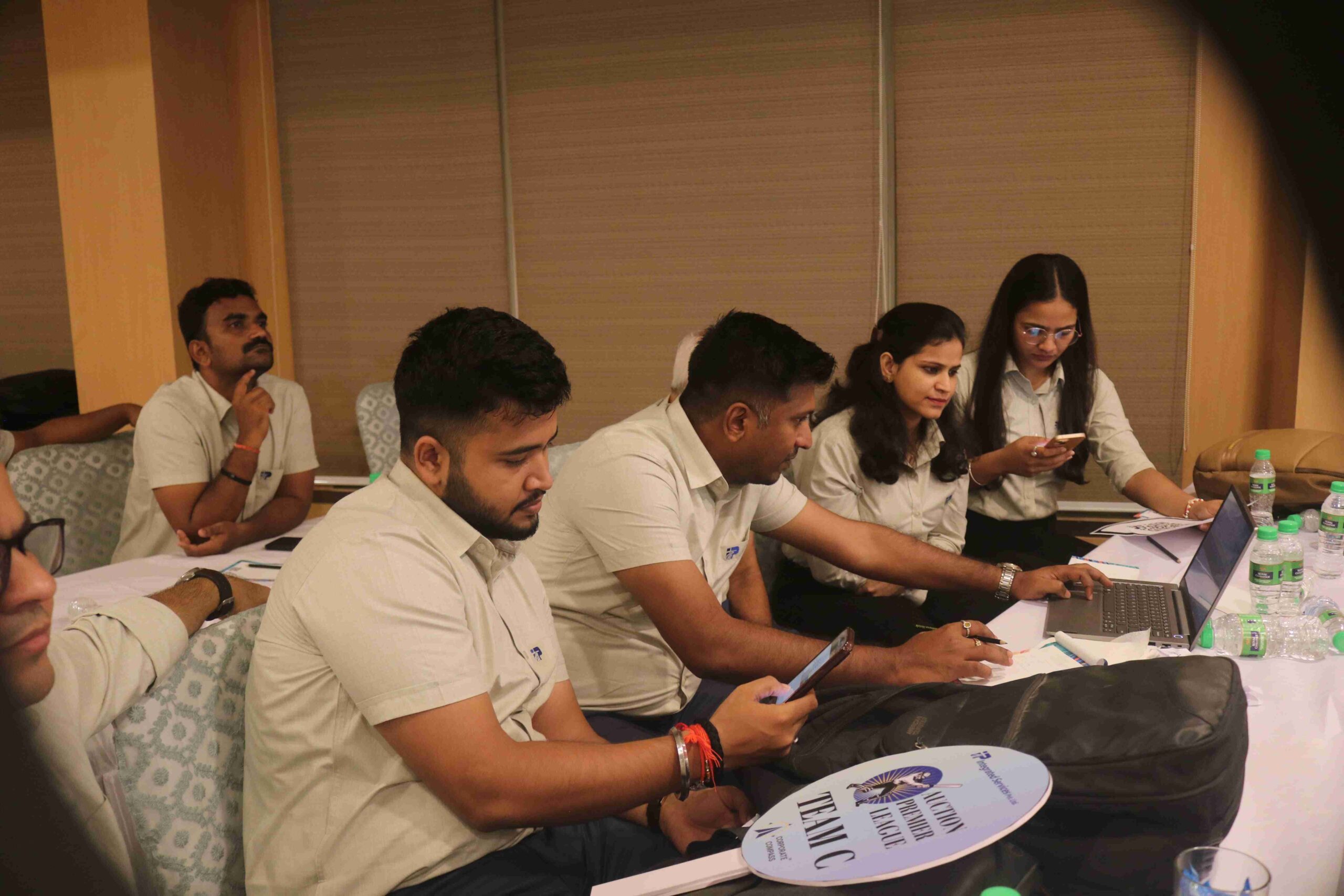
It is a fast simulation that teams have to create the best team possible by means of live auctions. Interest groups weigh alternatives, bargain, handle restricted resources and conduct strategic investments. The exercise builds planning, negotiation, resource management and leadership confidence.
This immersive mystery-solving game has participants acting as investigators that must unravel clues together to solve a complex case. The natural leaders form through organizing information, delegating responsibilities, and leading discussions. The game enhances analytical thinking, communication, and collaborative leadership.
The concept of Bollywood Bubble is to compete and produce a blockbuster film with few resources and unforeseen circumstances. Participants will be required to allocate roles, organize ideas, and make creative decisions collaboratively. This exercise develops innovation, delegation, teamwork, and adaptable leadership.
One Vision is an art-based activity in which each individual has to contribute to a single masterpiece. The key to success lies in coordination, communication and direction towards a shared objective. Leaders get to know how to influence people to work together and at the same time, work towards a common vision.
The Virtual Escape Room situates teams in a time-pressured setting in which they solve puzzles to escape within time constraints. Leaders need to be task-oriented, assign duties, and maintain concentration in the team. The exercise enhances critical thinking, teamwork, and pressure leadership.
Inside Out is an adventure that involves the use of technology, and participants are required to solve interrelated challenges by cooperating with their teammates. Through the game, leaders are challenged to be strategic and responsive to changing circumstances and to communicate effectively throughout the process.
This interactive game is a combination of an entertaining game with teamwork as it incorporates trivia, strategy, and friendly rivalry. The participants collaborate to answer questions and overcome problems, enhance communication and interaction, make decisions fast, and motivate upcoming leaders to be proactive.
Guesstimate is a factual team game in which the players make estimations based on logic, reasoning, and group discussion rather than precise knowledge. Leaders are taught to make better decisions using less information, facilitate involvement, and reach a consensus within the group.
Corporate Quiz Challenge encourages healthy competition and evaluates the knowledge, observation, and teamwork of the participants. Effective communication, role assignment, and decision-making are key elements in teams to work effectively, and it is a great activity to build confidence and leadership in a fun atmosphere.
Traditional classroom learning is concept-oriented, whereas Business Simulation Games are practical. The participants are also involved in the business issues rather than listening to presentations.
Simulations enhance knowledge retention as employees acquire knowledge through experience. They get instant feedback, see what their choices entail, and can develop their leadership style within a secure setting.
Organizations often combine simulations with activities like Office Game Ideas to Strengthen Team Bonding, Team Building Games Your Whole Team Will Love, and Fun Games for Corporate Events to reinforce collaboration and build stronger workplace relationships.
Working with experienced corporate learning partners ensures that these programs align with business goals and produce measurable leadership outcomes.
Developing strong leaders requires more than classroom training. It requires the possibilities to work on communication, decision-making, collaboration, and strategic thinking in real business scenarios.
These immersive experiences allow employees to gain confidence and practical leadership skills, whether it be in project management and solving business issues or leading cross-functional teams. Leadership simulation games provide an interactive learning experience in which participants are able to experiment, learn through errors, and improve without taking risks in a real business scenario.
When combined with initiatives like Office Game Ideas to Strengthen Team Bonding, Team Building Games Your Whole Team Will Love, and Fun Games for Corporate Events, organizations create a culture of continuous learning and teamwork. Partnering with trusted corporate learning partners further ensures that every learning experience delivers meaningful business results.
They are experiential learning activities that recreate real business scenarios, allowing participants to practice leadership, teamwork, and decision-making in a risk-free environment.
They help participants build communication, strategic thinking, problem-solving, adaptability, and decision-making skills through practical experiences.
New managers, team leaders, senior executives, and cross-functional teams can all benefit from Business Simulation Games.
They encourage employees from different departments to collaborate, communicate, and understand each other’s roles, as explained in How Business Simulations Help Cross-Functional Teams.
Experienced corporate learning partners design customized simulation programs that align with organizational goals and maximize learning outcomes.