

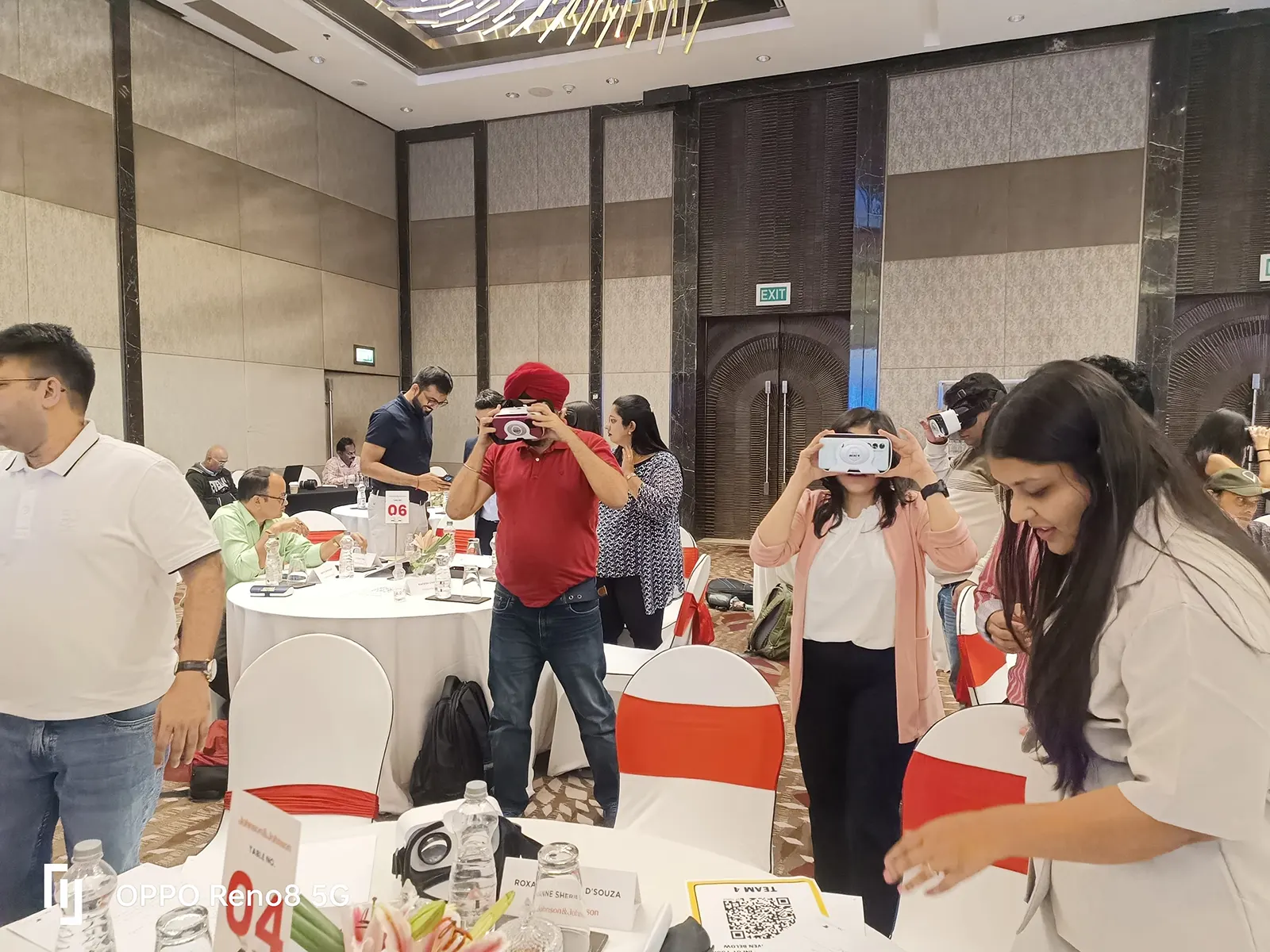
Contemporary organisations rely on teams that have an ability to work across departments, functions, and expertise. Nonetheless, even the most qualified workers tend to fail in working in other teams due to the absence of communication and conflicting priorities, as well as poor knowledge of how other departments work. It is here that business simulation games have come into their own.
In contrast to the conventional training techniques where topics or lectures are particularly important in learning, simulations put participants into a simulated business environment where they are required to collaborate to overcome challenges, make decisions and handle the effects of their decisions. Simulations, whether facilitated by a carefully designed business simulation workshop or more expansive game-based learning corporate programs, can provide simulation-based experiences to enhance teamwork, as well as retain employees by maintaining their active participation.
Cross-functional teams unite the employees of different departments like sales, operations, marketing, finance, HR and technology. Although this diversity enhances stronger decision-making, it also adds complexity.
Various departments tend to have different languages of operation and have different priorities. The marketing teams can concentrate on growth opportunities, whereas the finance teams can concentrate on budgets and cost control. The operations teams can focus on efficiency, and the sales teams insist on a quicker delivery schedule. Such disparities may delay projects, frustrate and decrease performance.
Conventional training programs tend to overlook these problems since workers are given information on a one-on-one basis, as opposed to working through teamwork. That is why business simulation games are becoming more popular as a more feasible method used by organisations.
Business simulations are participatory games that are meant to imitate a real-life business scenario. Participants collaborate to distribute resources, react to dynamic market conditions, make strategic decisions, and address realistic business challenges.
Instead of merely talking about teamwork, the participants are exposed to it.
An organized business simulation exercise usually develops situations in which all the choices affect various departments compelling participants to learn how the functions interrelate to each other.
This experiential learning model has better retention since employees do not learn by observation but by doing.
Simulations are one of the largest contributors to their effectiveness, as they bring about common experiences. Common problems that demand mutual decisions are experienced by employees who are used to working within subunits of a department.
When engaging in business simulation games, it takes a short time before participants understand that there is no department that functions in isolation. Operation is influenced by marketing decisions. Product development is impacted by financial constraints. All functions are affected by customer expectations.
Since employees perceive issues in different ways, teamwork will naturally improve. Rather than perceiving challenges from a departmental perspective, the participants learn to sympathise with the pressures and priorities of the other teams.
The other significant advantage is quicker decision-making. The problem lies in the fact that many organizations end up struggling due to the fact that the teams take a long time to get into sync before crucial decisions are reached. During a business simulation workshop, teams must analyze information quickly, discuss trade-offs, allocate resources, and respond under pressure.
Since participants can feel the immediate effects of their decisions, they get to understand the importance of alignment.
Silos within organizations are also among the biggest impediments to teamwork. The various departments may often strive to optimize their performance but inadvertently cause tension in other areas.
In this case, the use of game-based learning corporate programs can be of particular value.
In simulations, it becomes hard to make isolated decision-making as the results are interdependent. Participants soon understand that it is not about individual performance, but coordination.
Constant exposure to such teamwork situations stimulates employees to bring such behaviours to their daily work.
As time goes by, teams become less concerned with individual functions and more with the whole business.
Poor collaboration is usually underlied with communication issues. Staffs might know clearly their own objectives, but have difficulty in articulating priorities to other teams.
The simulations in businesses enhance communication since the participants are trained again and again in communicating ideas, negotiating trade-offs, presenting recommendations and solving disagreements.
In contrast to conventional training sessions where the communication is still theoretical, business simulation games compel the teams to communicate at all times.
The outcome is a higher level of confidence, better human relations, and enhanced teamwork.
The fact that simulations are engaging in nature is one of the reasons why they keep gaining popularity. The traditional training is usually problematic since the subjects involved spend long hours being inactive.
Simulations provide active learning experiences in which employees are competing, collaborating, problem-solving, and getting instant feedback. All these factors contribute to the increased retention of business simulation games, as players can be emotionally connected to the results.
Experiences are usually recalled much more than presentations. This enhanced participation usually results in enhanced learning retention and improved behavior change.
An important aspect of cross-functional teamwork is trust. Nevertheless, trust is normally built over time since employees of diverse departments do not always co-operate with each other.
An organized business simulation exercise speeds up this process by putting participants in common challenges where they are only successful when they work together. Teams problem solve as a team, fail as a team and win as a team.
Such common experiences promote far more relationships than traditional methods of training.Employees should trust each other, as then it becomes easier to work together.
Cross-functional environments require leadership skills at every level, not only among senior managers.
Business simulations create opportunities for participants to practice leadership behaviors such as decision-making, communication, prioritization, negotiation, and conflict resolution.
Many organizations specifically use business simulation games for leadership development because simulations reveal behaviors more effectively than lectures or classroom discussions.
Participants learn how they react under pressure while gaining opportunities to improve.
Organizations increasingly want measurable outcomes from learning programs.
A successful business simulation workshop typically produces improvements across multiple areas, including stronger collaboration, faster decision-making, improved communication, higher engagement, and greater alignment between departments.
Companies often notice improvements not only in employee feedback but also in project execution, customer outcomes, and operational performance.
The key is establishing clear objectives before the simulation begins.
Modern businesses operate in increasingly complex environments where collaboration, adaptability, and faster decision-making matter more than ever.
As a result, organizations are investing more heavily in game based learning corporate programs that combine practical learning with engaging experiences.
Organizations increasingly combine simulations with Creative Problem-Solving Games because solving realistic challenges helps teams develop stronger analytical and decision-making skills.
Many companies now partner with a specialized Corporate Team Building Company to design customized experiences that align with business goals while improving collaboration.
Digital simulations, hybrid learning experiences, competitive scenarios, and interactive workshops continue expanding because organizations increasingly recognize that employees learn best when actively involved.
Cross-functional collaboration remains one of the biggest challenges organizations face today. Communication gaps, departmental silos, and conflicting priorities can slow growth and reduce performance.
Business simulation games offer organizations a practical solution by creating realistic experiences where employees practice collaboration instead of simply discussing it.
When organizations invest in structured business simulation workshop programs and embrace game based learning corporate approaches, teams become better communicators, stronger decision-makers, and more effective collaborators.
Whether combined with Fun Games for Corporate Events, interactive Indoor Team Building Activities, or strategic learning programs designed by a Corporate Team Building Company, simulation-based learning creates stronger teams that perform better together.